





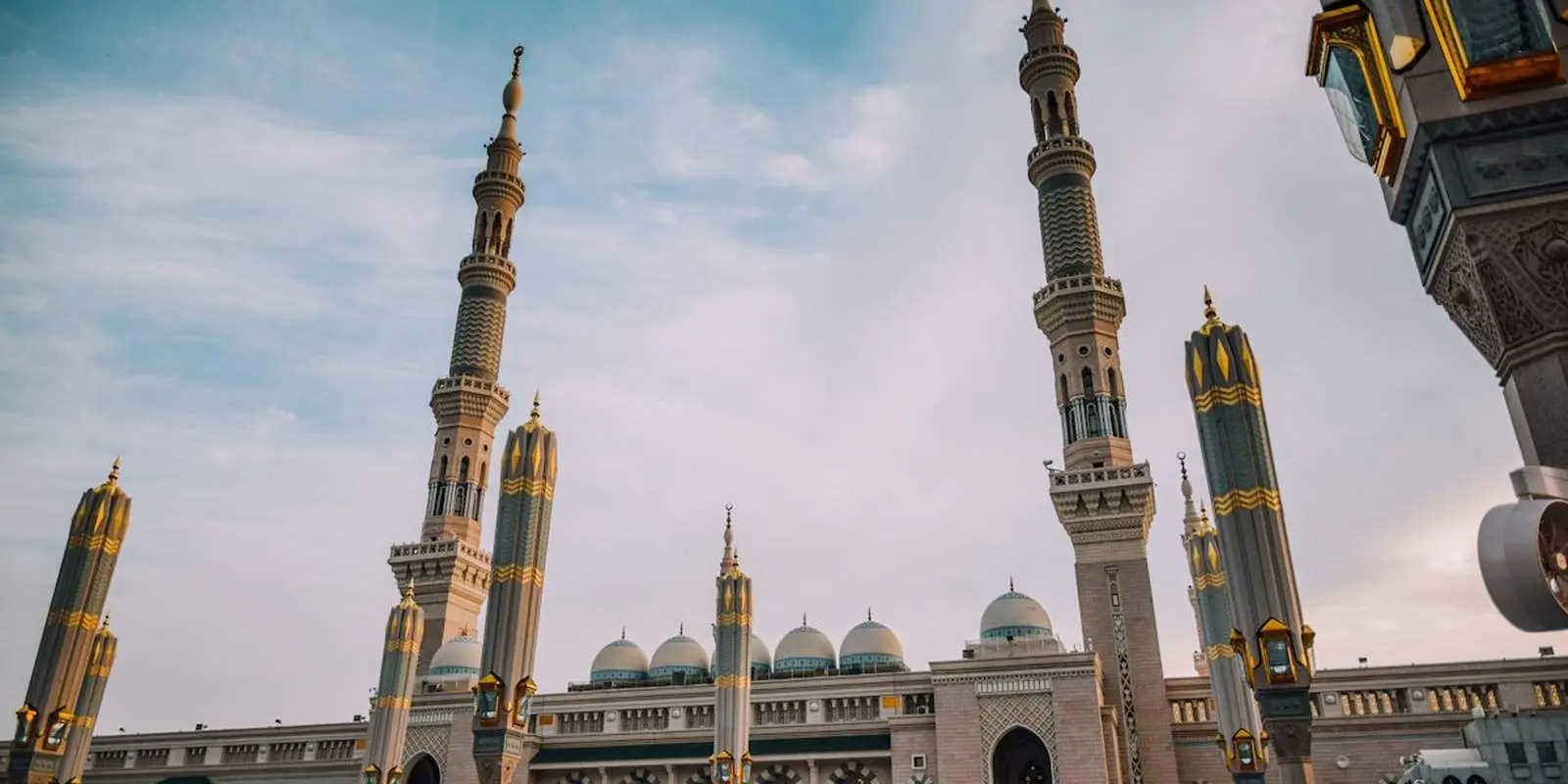
Madinah ziyarat means visiting the city's sacred and historic sites: Masjid an-Nabawi and the Rawdah, Masjid Quba, Masjid al-Qiblatayn, Mount Uhud and Jannat al-Baqi. Our packages include a guided tour of Quba, Qiblatayn, Uhud, the Prophet's Biography museum and the date farms. Book the Rawdah yourself on the Nusuk app, and plan at least four nights.
How should you prepare before visiting Madinah?
Prepare by learning the Seerah first, because the sites only speak when you know what happened there. Read a short biography of the Prophet ﷺ before you fly, with special attention to the Hijrah, the Battle of Uhud and the change of qiblah.
Make your intention for travelling to Madinah the visit to the Prophet's Mosque and prayer in it, which is the purpose the hadith encourages. Greeting the Prophet ﷺ at his grave follows naturally once you are there. Keep a short list of du'as for your family, and write down the names of people who asked you to pray for them.
What does Madinah ziyarat include on our packages?
Every Rawdhah Tours package includes a guided Madinah ziyarat by coach covering Masjid Quba, Masjid al-Qiblatayn, Mount Uhud, the International Museum of the Prophet's Biography, and the date farms and markets. Ziyarat simply means visiting; it is not part of the Umrah rites, but it deepens your connection with the Seerah, the life of the Prophet ﷺ.
| Site | Included tour? | How to visit |
|---|---|---|
| Masjid an-Nabawi | On your doorstep | Walk from the hotel for every prayer |
| The Rawdah | No | Book a permit yourself on the Nusuk app; we show you how |
| Jannat al-Baqi | No | Walk from the mosque's east side at the set visiting times |
| Masjid Quba | Yes | Coach tour, or a taxi any other day |
| Masjid al-Qiblatayn | Yes | Coach tour |
| Mount Uhud and the martyrs | Yes | Coach tour |
| Prophet's Biography museum | Yes | Coach tour or on foot |
| Date farms and markets | Yes | Coach tour |
| Seven Mosques (Khandaq area) | No | Extra trip by taxi; not in the schedule |
Extra ziyarat outside the schedule is not included, but it is easy to arrange by taxi once you are there. The tour usually runs as a single morning, so you are back for Dhuhr in Masjid an-Nabawi.
How should you behave at Masjid an-Nabawi?
Enter the Prophet's Mosque calmly, with the right foot first, pray two units on arrival and keep your voice low. Allah says in the Quran not to raise your voices above the voice of the Prophet (Surah al-Hujurat 49:2), and scholars apply this respect to his mosque and grave.
A prayer in this mosque is better than a thousand prayers elsewhere, except in Masjid al-Haram (Sahih al-Bukhari 1190). The Prophet ﷺ also named it one of only three mosques worth a special journey (Sahih al-Bukhari 1189). That is why most pilgrims spend the bulk of their Madinah time inside it rather than on tours.
To greet the Prophet ﷺ, follow the flow of people past the grave and say as-salamu 'alayka ya Rasulallah, then greet Abu Bakr and Umar, whose graves lie beside his. Mainstream scholarship teaches that you then move on, without touching or kissing the grilles, and turn towards the qiblah for personal du'a. Staff keep the line moving, so greet briefly and step aside.
Men and women use different entrances and prayer halls. Note your gate number when you arrive, as many gates look alike, and leave bags light, because security checks large bags at busy times.
How do you get a Rawdah permit on the Nusuk app?
You need a free permit from the Nusuk app to enter the Rawdah, the area between the Prophet's ﷺ house and pulpit. He said this space is a garden from the gardens of Paradise (Sahih al-Bukhari 1196). Permits can be booked once every 365 days, and a same-day option exists for people already near the mosque, according to a December 2025 report. Checked November 2026.
| Women | Men | |
|---|---|---|
| Saturday to Thursday | After Fajr to 11:00; after Isha to 02:00 | 02:00 to Fajr; 11:20 to Isha |
| Friday | After Fajr to 09:00; after Isha to 02:00 | 02:00 to Fajr; 09:20 to 11:20; after Jumu'ah to Isha |
Visitors were directed to enter through the southern courtyards, in front of gate 37, and elderly visitors could enter in a manual wheelchair. Times and gates change, so check the app on the day. Open slots release in batches and go fast; try as soon as you know your Madinah dates, and again on arrival.
Inside, you have a short window. Pray two units if space allows, make your du'a, and leave when staff ask. Pushing for a spot on the green carpet harms others and defeats the purpose of the visit.
Why visit Masjid Quba, and what is the reward?
Praying in Masjid Quba carries the reward of an Umrah, according to an authentic hadith. The Prophet ﷺ said that whoever purifies himself in his house, then comes to Masjid Quba and prays in it, will have a reward like that of Umrah (Sunan Ibn Majah 1412, graded sahih).
Quba was the first mosque built in Islam, founded when the Prophet ﷺ arrived from Makkah during the Hijrah. Many scholars link it to the Quran's description of a mosque founded on piety from the first day (Surah at-Tawbah 9:108). The Prophet ﷺ used to visit Quba every Saturday, walking or riding, and pray two units there (Sahih al-Bukhari 1193).
To follow the hadith closely, make wudu at your hotel before you leave. The ziyarat coach stops at Quba, but many pilgrims return on a Saturday morning by taxi, a short ride of a few kilometres south of the Prophet's Mosque. Arrive between prayer times, when the halls are calmer.
What happened at Masjid al-Qiblatayn?
Masjid al-Qiblatayn, the Mosque of the Two Qiblahs, marks where the direction of prayer changed from Jerusalem to the Kaaba. The verse ordering the change is in Surah al-Baqarah (2:144), and reports place it in the second year after the Hijrah.
Today the mosque faces only the Kaaba, and there is no special reward attached to praying there beyond that of any mosque. Pilgrims usually pray two units of greeting the mosque and reflect on how quickly the Companions obeyed when the command came.
The stop is short, around 20 to 30 minutes on our tour. Women have a separate entrance, and the mosque is busy when several coaches arrive together, so keep your group in sight.
What should you know about Mount Uhud and the martyrs?
Mount Uhud is the site of the Battle of Uhud in the third year after the Hijrah, where about seventy Companions were martyred, including the Prophet's uncle Hamzah ibn Abd al-Muttalib. Their graves lie in a walled area at the foot of the small hill once held by the archers.
The Prophet ﷺ said of this mountain that Uhud loves us and we love it, a narration recorded in Sahih al-Bukhari. Standing by the archers' hill, guides retell how some archers left their posts against orders, a lesson about obedience that still lands with every group.
At the martyrs' graves, give salam and make du'a for them, as the Prophet ﷺ taught for visiting graves. Mainstream scholars advise against taking soil, tying threads or calling on the martyrs for help. The site is open and hot by late morning, so take water and a hat.
When can you visit Jannat al-Baqi, and how?
Jannat al-Baqi, Madinah's main cemetery, sits beside the east side of the Prophet's Mosque and has been open to visitors after Fajr and after Asr, according to reports from November 2024. Thousands of Companions are buried there, including Uthman ibn Affan, members of the Prophet's family and several of his wives. Checked November 2026: confirm the times at the gate.
Men enter at the visiting times. Women are not usually admitted inside under current practice, and many make du'a from the perimeter fence; scholars differ on women visiting graves, so follow the view you trust. There are no marked headstones, only simple mounds and paths.
Use the greeting the Prophet ﷺ taught: as-salamu 'alaykum ahl ad-diyar min al-mu'minin wal-muslimin, wa inna in sha Allahu bikum lahiqun, nas'alullaha lana wa lakum al-'afiyah (Sahih Muslim 975). It asks for peace on the believers buried there and reminds the visitor of death. Keep your voice low, do not touch the graves, and leave space for funerals, which happen often after prayers.
What is in the Prophet's Biography museum?
The International Museum of the Prophet's Biography and Islamic Civilisation tells the story of the Prophet's ﷺ life through models, screens and displays, and it is part of our included ziyarat. It suits families and anyone who wants the Seerah laid out in order before visiting the sites.
Exhibits cover Makkah before Islam, the Hijrah, the household of the Prophet ﷺ, his character and the growth of early Madinah. Visit it early in your Madinah stay; the later visits to Quba and Uhud make more sense afterwards. Allow about an hour, and ask our guide where the group meets afterwards.
Which date farms and markets will you see?
The ziyarat ends at a date farm and market, where you can taste and buy Madinah's famous dates, including Ajwa. The Prophet ﷺ said that whoever eats seven Ajwa dates in the morning will not be harmed that day by poison or magic (Sahih al-Bukhari 5445).
Prices vary with grade and size, so taste before you buy and compare a few stalls. Ask for vacuum-packed boxes for the flight home, and remember that your luggage allowance is shared with the 5-litre Zamzam crate included in your package.
The market near the mosque also sells prayer mats, perfume oils and books. Personal shopping is not included in the package, so set a family budget before the tour.
Which sites can you reach on foot from the Prophet's Mosque?
Several historic mosques lie a short walk from Masjid an-Nabawi, so you can visit them between prayers without a coach. These are not on our coach tour because they are so close.
- Masjid al-Ghamamah: a small mosque south-west of the main courtyards, at the place where the Prophet ﷺ is reported to have prayed the Eid prayer in the open.
- Masjid Abu Bakr and Masjid Ali: two small mosques close to al-Ghamamah, named after the Companions.
- Jannat al-Baqi: right beside the east courtyards of the mosque.
- The Prophet's Biography museum: close enough to visit on foot again if your group's stop felt short.
Walk these early in the morning after Fajr, when the courtyards are cool and the shops are still shut. Opening hours for the smaller mosques vary, so you may only see some from outside.
How do you get around Madinah between sites?
Use the included coach tour for the main sites and a taxi or ride-hailing app for anything else. Ride-hailing apps work in Madinah, and taxis wait near the hotels around the mosque. Agree the fare before you get in a street taxi.
Quba is a few kilometres south of the Prophet's Mosque, and Uhud a little further north, so each is a short ride. Avoid travelling just before Jumu'ah on Friday or just before Maghrib, when the roads around the mosque close up and every pilgrim is heading the same way.
How much time should you plan for Madinah?
Plan at least four nights in Madinah, which is what our 7-night packages give you. Four nights allows the coach ziyarat, a Rawdah visit, a return to Quba and plenty of prayers in the Prophet's Mosque without rushing.
| Package length | Madinah nights | What fits |
|---|---|---|
| 7 nights | 4 | Ziyarat morning, Rawdah, Baqi, one Saturday-style Quba visit |
| 10 nights | 5 | Add the museum at a slower pace and a second Quba visit |
| 12 nights | 6 | Add the Seven Mosques by taxi and quiet days |
| 14 nights | 7 | Time to read the Seerah between visits and pray every prayer in the mosque |
Choose a hotel close to the mosque, so you spend your time on worship rather than walking. On our packages, Emaar Elite is under 100 metres away, Emaar Royal Madinah is about 100 metres, Zowar International is 180 metres, and Pullman ZamZam Madinah and Anwar Al Madinah Mövenpick are steps away. Compare packages on the Umrah packages page.
Which practices do mainstream scholars advise avoiding?
Mainstream scholarship advises visiting Madinah's sites with respect and remembrance, while avoiding acts the Prophet ﷺ did not teach. Saudi mosque staff will also step in if they see them.
- Touching, kissing or wiping the walls, grilles or pillars for blessing.
- Taking soil or stones from Uhud, Baqi or any site.
- Tying cloth or threads to fences and trees.
- Praying towards a grave, or asking the dead for help rather than asking Allah.
- Raising voices or crowding near the Prophet's grave.
- Treating the ziyarat sites as part of the Umrah rites; they are not.
Different communities hold different views on some practices, such as the form of greeting at the grave. Our guides explain the history; for rulings, ask a scholar you trust. For Makkah's rites, read the how to perform Umrah guide, and first-timers should start with our first Umrah guide.