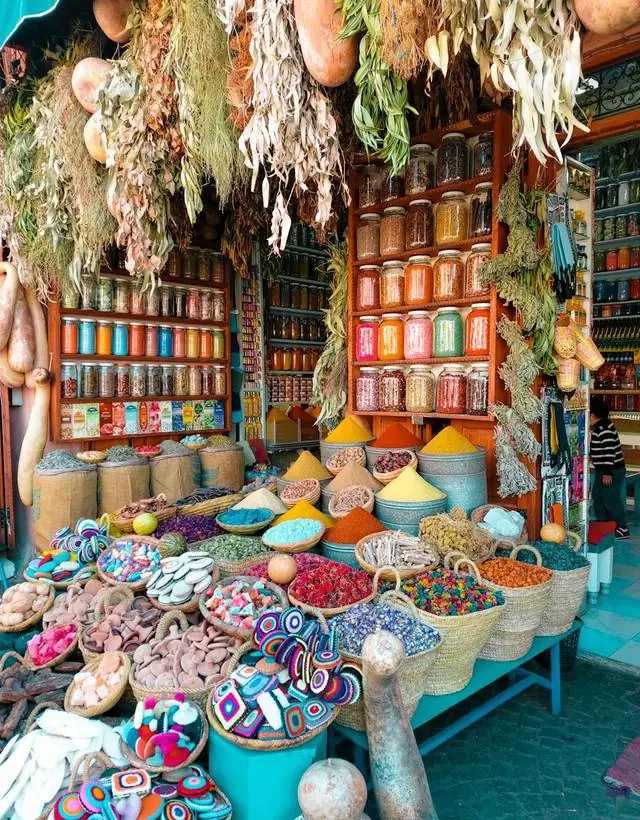
Marrakech feels a world away from the UK, yet many families are in their riad before lunch after a morning flight. The red city was founded in the eleventh century by the Almoravids and became one of the great capitals of the Muslim West. Today the call to prayer still sets the rhythm of the medina, and halal food is simply food. This guide covers the practical side: where to stay, when to go, how to handle the souks and how to fit prayer into a busy day.
Is Marrakech a good halal holiday destination?
Yes. Morocco is a Muslim country where virtually all meat is halal, mosques are on every street, and the working week pauses for Jumu'ah. You will not need to check menus for pork in local restaurants.
Alcohol is legal in licensed hotels, some restaurants and certain supermarkets, mostly aimed at tourists. Many traditional riads in the medina do not serve it at all, and we can confirm this before you book. Larger resort hotels in the Palmeraie are more likely to have bars.
One difference from Turkey or Malaysia is worth knowing. Most mosques in Morocco are open to Muslims only, so you can pray inside the Koutoubia and neighbourhood mosques, while non-Muslim friends or relatives in your group will view them from outside.
Best time to visit Marrakech
March to May and late September to November are the best times to visit Marrakech. Days are warm and dry, evenings are comfortable on the roof terrace, and the Atlas Mountains are green in spring.
| Month | Average high (approx.) | Notes |
|---|
| Dec to Feb | 18 to 20°C | Sunny days, cold nights near 5°C, snow on the Atlas peaks |
| Mar to May | 23 to 29°C | The best season for walking and the mountains |
| Jun to Aug | 33 to 37°C | Very hot in the medina; plan outings early and late |
| Sep to Nov | 22 to 32°C | Warm and settled; October half-term is popular |
February half-term and the Christmas holidays are good value for sunshine, but riads have thick walls and few radiators. Ask for a room with heating, or a hotel with an indoor pool, if you travel between December and February.
Ramadan in Marrakech
Ramadan changes the rhythm of Marrakech more than most cities. In 2027 it is expected to start around 8 February, subject to moon sighting. Many local cafés close in the day, the medina is quieter until late afternoon, and Jemaa el-Fnaa fills with families and harira soup stalls after Maghrib.
Morocco usually puts its clocks back by one hour during Ramadan, so iftar and suhoor times shift. Hotels and some tourist restaurants still serve lunch for children and travellers, and we tell you on arrival what is open near your riad.
Flights from the UK to Marrakech
Marrakech is about 3.5 hours from London, and direct flights leave from a long list of UK airports. British Airways flies from Heathrow and Gatwick, and low-cost and holiday airlines such as easyJet, Ryanair, Jet2 and TUI fly from airports including Luton, Stansted, Manchester, Birmingham, Bristol, Edinburgh and Newcastle.
Some regional routes, including Leeds Bradford and Glasgow, are seasonal. Flights from Scotland and the North take about 4 hours. We confirm the airline and bag allowance on your quote, because low-cost fares can look cheaper until luggage is added.
Morocco is normally one hour ahead of the UK in winter and the same time in summer, apart from the Ramadan change above.
Morocco entry rules for British citizens
British citizens can visit Morocco without a visa for up to 90 days for tourism, according to the FCDO (checked November 2026). Your passport must have an expiry date at least 3 months after the day you arrive.
Two practical points from the FCDO advice matter here. Border officials should stamp your passport on entry, and some travellers have had trouble leaving without that stamp. Morocco has also refused entry to some people with damaged passports, so replace a torn or water-damaged passport before you travel. Our travel requirements page explains how we check documents.
Your 6-night Marrakech itinerary, day by day
- Day 1, arrive: private transfer to the edge of the medina, where a porter carries bags to your riad; mint tea and a gentle evening.
- Day 2, the medina: a guided walk to the Koutoubia, the souks, Ben Youssef Madrasa and the evening food stalls of Jemaa el-Fnaa.
- Day 3, the Atlas Mountains: a drive into the High Atlas, a short walk to a waterfall or village, and lunch with a Berber family.
- Day 4, gardens and hammam: the Majorelle Garden in the morning, then a traditional hammam and scrub in the afternoon.
- Day 5, palaces and tombs: the Bahia Palace, the Saadian Tombs and the old Jewish quarter, the Mellah.
- Day 6, free day: shopping, the roof terrace, or a day trip to the coast at Essaouira.
- Day 7, fly home: a free morning, then the transfer to the airport.
Days can swap around for weather and flights. If Jumu'ah falls in your stay, we keep the middle of Friday free so you can pray at the Koutoubia, where the courtyard fills well before the khutbah.
Islamic monuments of Marrakech
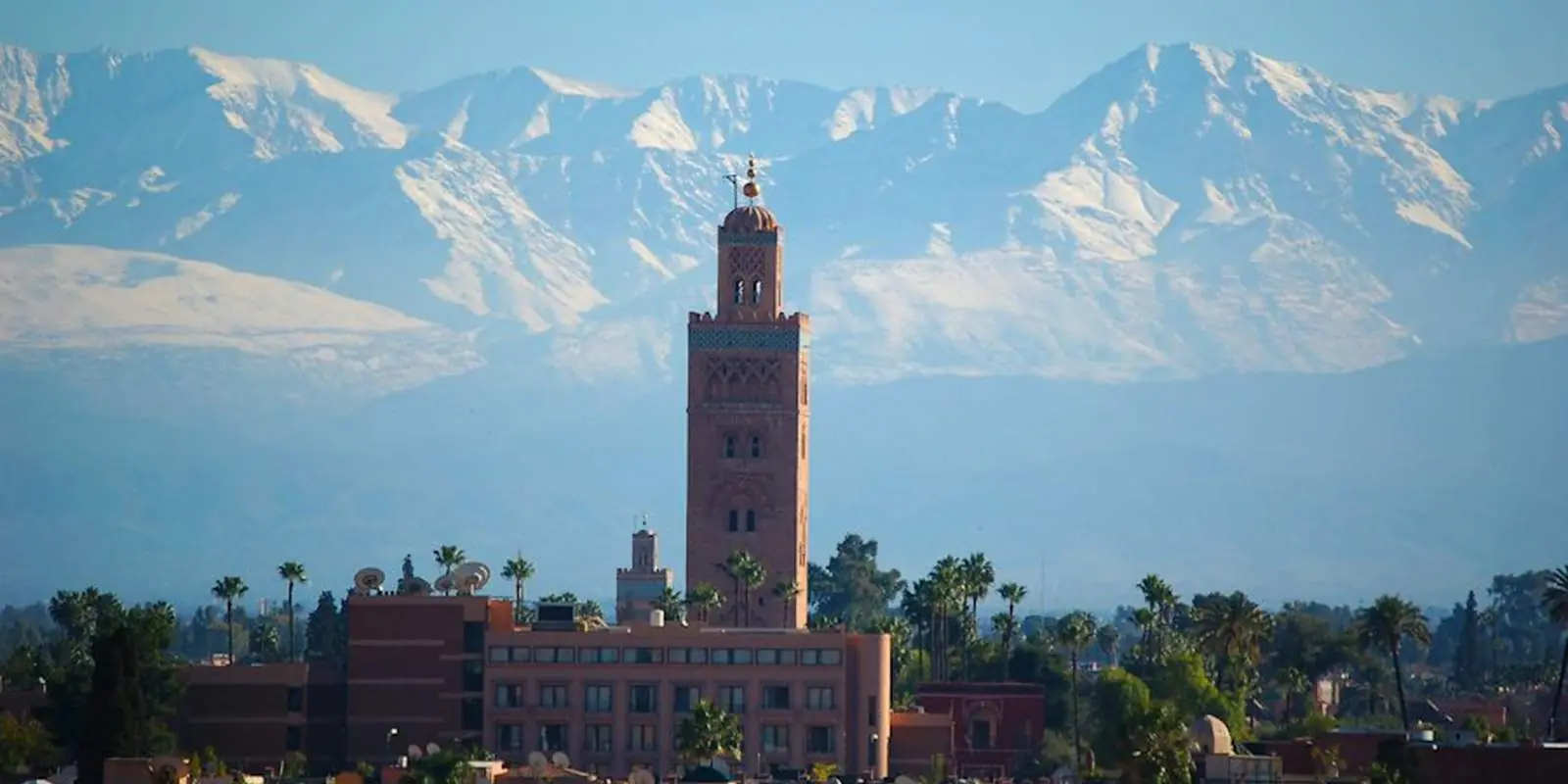
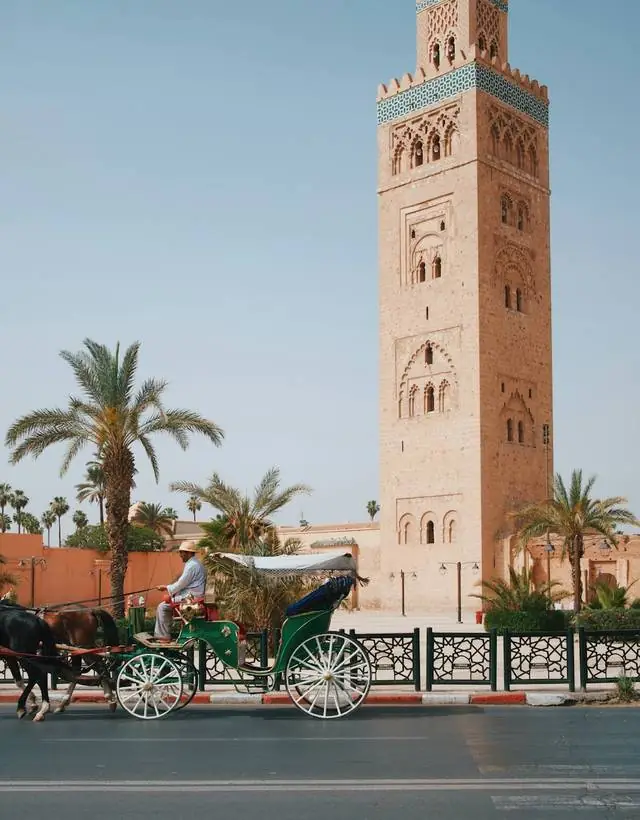
The Koutoubia Mosque is the largest mosque in Marrakech and the city's landmark. It was built by the Almohad dynasty in the twelfth century, and its 77-metre minaret was completed in the 1190s. Its name comes from the booksellers (kutubiyyin) who once traded at its foot.
Ben Youssef Madrasa was a residential college for students of the Quran and Islamic law, rebuilt by the Saadian dynasty in the 1560s. Its courtyard of carved cedar, stucco and zellige tilework is one of the finest in Morocco, and it reopened in 2022 after restoration.
The Saadian Tombs hold members of the Saadian dynasty from the late sixteenth century, including Sultan Ahmad al-Mansur. They were sealed off for centuries and only rediscovered in 1917.
Jemaa el-Fnaa, the great square, was named by UNESCO as a masterpiece of oral and intangible heritage in 2001. Storytellers, musicians and food stalls fill it each evening, and the whole medina is a UNESCO World Heritage Site.
Riads, privacy and modest pools
A riad is a traditional house built around an inner courtyard, and staying in one is a highlight of Marrakech. Outside walls have few windows, which gives families a lot of privacy, and many riads can be booked whole for a group.
Riad pools are usually small plunge pools in the courtyard or on the roof. They are rarely overlooked, so women can swim in comfort, especially when you book the whole riad for your family. For a full swimming pool and more space for children, a garden hotel just outside the medina is often better.
Marrakech with children and older parents
Marrakech works for families, but the medina is busy and noisy. Scooters and donkey carts share lanes with walkers, so keep small children close and use a baby carrier rather than a pushchair.
Riads often have steep stairs and no lifts, which can be hard for grandparents. We ask for ground-floor rooms or choose a hotel with lifts, and we use a car for the Atlas day so nobody has to walk far. Children usually love the camel rides in the Palmeraie and the snake charmers in the square.
The medina, the souks and Moroccan food
The medina is a maze, and getting lost is part of the experience, but a guide makes the first day far easier. Cars cannot enter most lanes, so drivers drop you at the nearest gate and a porter takes your bags on a handcart to the riad.
Expect friendly but persistent offers from sellers and self-appointed guides. A polite "la, shukran" (no, thank you) and walking on usually works, and you should not follow anyone who says a road is closed.
Plan prayers around the mosques on your route. The Koutoubia is easy to find from Jemaa el-Fnaa, and there are smaller mosques throughout the souks where men can pray; women's sections are less common in small neighbourhood mosques, so many women pray at the riad.
Moroccan cooking is slow, fragrant and halal by default. Tagines of lamb with prunes or chicken with preserved lemon and olives, Friday couscous, and pastilla, a sweet and savoury pie, are the dishes to try.
Mint tea is poured from a height and offered almost everywhere, often very sweet, so ask for less sugar if you prefer. For children, the grilled meat stalls and fresh orange juice in Jemaa el-Fnaa are usually the favourites. Bread is baked in shared neighbourhood ovens and served with every meal.
Budget levels and booking
Marrakech covers a wide range of budgets. Classic uses well-run riads in the medina; Premium offers larger riads or garden hotels with private guides; Family focuses on hotels with full pools and connecting rooms near the medina.
Ask for a quote by phone, WhatsApp or our contact page; the final price is confirmed in writing before payment. Flights and packages we sell are ATOL protected only in some cases (ATOL 11203), and if you receive no ATOL Certificate your booking is not protected under ATOL. Ask us which applies first, and read our ATOL guide. Compare other trips on the halal holidays page.