






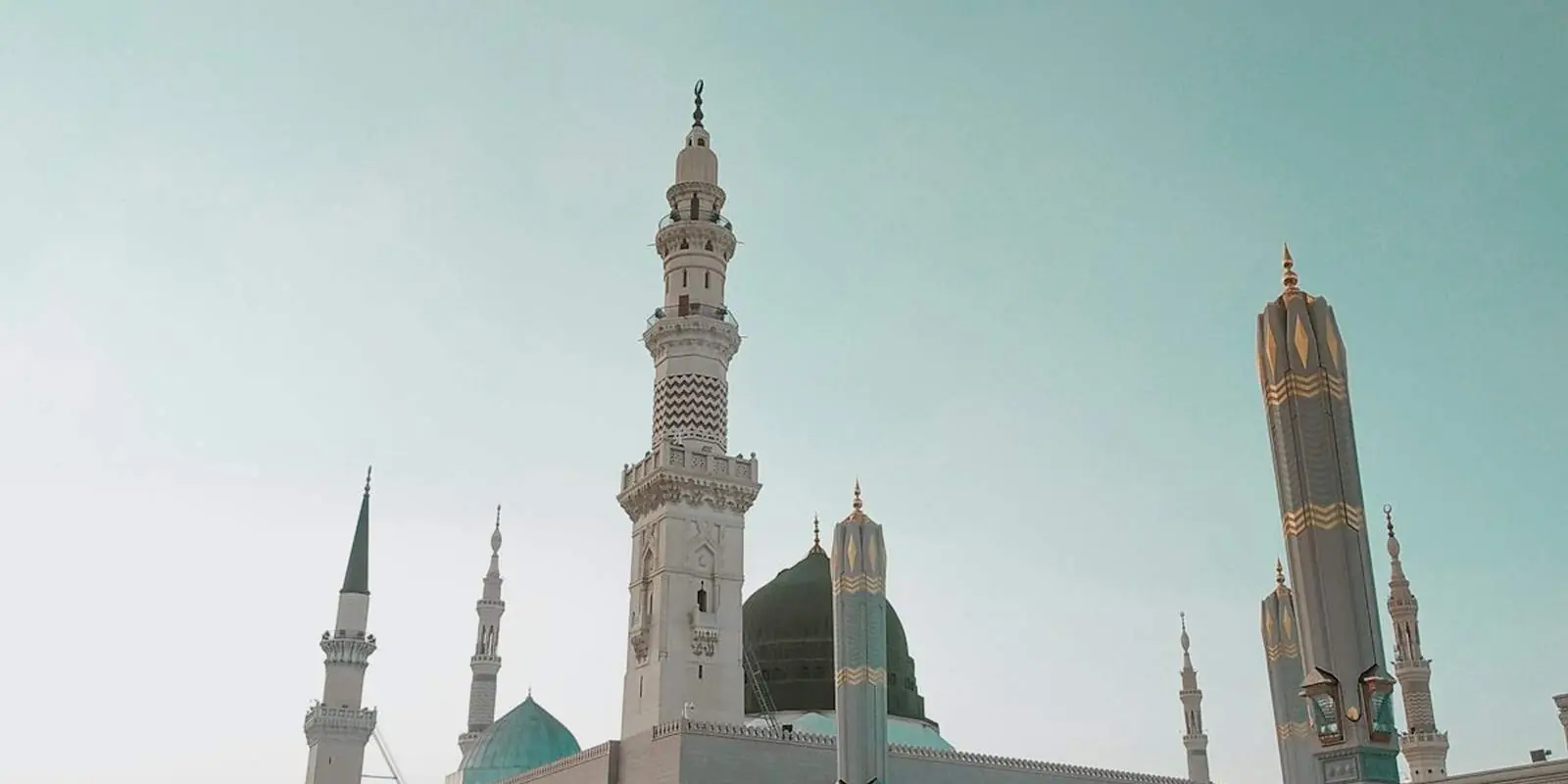
Under current Saudi rules, women of any age can perform Umrah without a mahram when travelling with an organised group. Women wear ordinary modest clothing in Ihram but no niqab or gloves, cannot perform tawaf during a period, and book Rawdah visits in women's time slots through the Nusuk app.
Can women perform Umrah without a mahram?
Yes, Saudi rules currently allow women of any age to perform Umrah without a mahram (a close male relative such as a husband, father, brother or son) when they travel with an organised group. The Ministry of Hajj and Umrah announced the change in 2021, replacing an older rule that only exempted women over 45 travelling in a group. Rules can change, so we confirm the position for your dates when we quote.
The religious question is separate from the visa rule. Classical scholars differ on whether a woman may travel for Umrah without a mahram: some schools permit it in a safe, trustworthy group, while others, including many Hanafi scholars, hold that a mahram is required for a journey of this length. Ask a scholar you trust which view to follow, and make the decision with your family before you book.
Many women travel in pairs, with mothers, sisters or friends, or join one of our group Umrah departures. If you plan to go without relatives, mention it when you ask for a quote, so we can talk through rooming, flights and who you will travel alongside.
What does a woman wear in Ihram?
A woman's Ihram is her normal modest clothing; there is no special garment and no required colour. Choose loose, non-transparent clothes that cover the body except the face and hands, such as an abaya over loose trousers, with a hijab that covers the hair, neck and chest.
Two things are not allowed in Ihram: the niqab and gloves. Many scholars, following reports from the wives of the Prophet ﷺ, allow a woman to let a loose cloth hang down in front of her face when unrelated men are close, as long as it is not a fitted face veil. Socks and closed shoes are permitted for women, unlike men.
Perfume is forbidden after the intention, so use fragrance-free deodorant, soap and hair products. Make-up is discouraged by many scholars during Ihram and the scented kind is not allowed. Our Umrah packing list covers fabrics, socks and the warm layers you will want in Madinah.
How are tawaf and sa'i different for women?
Women perform the same seven circuits of tawaf and seven laps of sa'i, with three small differences. They do not uncover the right shoulder, do not walk briskly in the first three circuits, and do not jog between the green lights in sa'i. Tawaf means circling the Kaaba, and sa'i means walking between the hills of Safa and Marwah.
The space next to the Kaaba gets tightly packed, and women can find themselves pressed against men in the crowd. Choose quieter times, such as late at night or mid-morning outside the peak seasons, or perform tawaf on the first floor where there is more room. Touching the Black Stone is not required, and scholars advise women not to push through crowds of men to reach it.
At the end of Umrah, women cut about a fingertip's length from the ends of their hair, ideally in private at the hotel. They never shave the head. Our step-by-step guide to how to perform Umrah walks through each rite in order.
Can you perform Umrah during your period?
A woman on her period can enter Ihram, but she must not perform tawaf until her bleeding has stopped and she has taken a ghusl (ritual bath). This is the mainstream position across the four schools. Everything else in Ihram is the same: she can make dua, remember Allah, recite the talbiyah and visit the city.
If your period starts before you reach the Miqat, the usual advice is still to enter Ihram there, then wait in Makkah until you are pure before doing tawaf and sa'i. If it starts after tawaf but before sa'i, most scholars say you may complete sa'i, because purity is not a condition for it. A woman cannot enter the prayer hall of the mosque during her period according to most scholars, though she can sit in the outer courtyards.
Time is the practical problem on a short trip. On a 7-night package with only three nights in Makkah, a period can leave no time for tawaf, so women often choose a 10-night trip or ask for Madinah first, which gives more days before the Makkah stay. Plan this with us when you book; changes later can cost more.
Some women take medication to delay a period during Umrah. Many scholars allow this if it causes no harm, but speak to your GP or pharmacist first about the medical side. Irregular bleeding outside the normal cycle (istihadah) has different rules, and a woman who must leave before becoming pure faces a complex situation. In both cases, contact a qualified scholar.
Where do women pray in Masjid al-Haram and Masjid an-Nabawi?
Both mosques have dedicated women's prayer areas, marked with signs and staffed by female attendants at the busiest entrances. Outside the five prayer times, women can move freely in the tawaf area and most of the mosque. When the call to prayer sounds, security staff ask women to move into the women's sections, so allow time to get there before the iqamah.
In Masjid an-Nabawi in Madinah, women use separate entrances and prayer halls. Note the gate number you entered by and agree a meeting point outside, such as a numbered gate or a landmark, with your family. Phone signal can be weak inside at peak times, so a fixed plan matters.
In Masjid al-Haram, women's areas are spread across several levels and change with crowd management. For Friday prayers and in Ramadan, aim to arrive at least an hour early, because the women's sections often fill first.
How do women visit the Rawdah in Madinah?
Women visit the Rawdah in separate time slots booked through the Nusuk app. The Rawdah is the area of Masjid an-Nabawi between the Prophet's ﷺ house and his minbar, described in a hadith as a garden from the gardens of Paradise. Without a confirmed slot on Nusuk you will not be let in.
Saudi authorities reported the current women's times as after Fajr until 11:00 am and after Isha until 2:00 am, with a shorter morning window on Fridays (after Fajr until 9:00 am). The same report in December 2025 said a permit can be booked once every 365 days, with an extra option for those already near the mosque. Times and quotas change often, so check Nusuk before relying on them. Men and women never share a slot, so couples should book two separate permits and agree where to meet afterwards.
Book the slot in Nusuk as soon as your Madinah dates are confirmed, because popular slots go quickly. On the day, arrive early at the women's entrance shown in the app, keep the permit QR code ready offline, and expect a short, managed visit. Bring only a small bag and be prepared to pray two rak'ahs quickly so others get their turn.
Should women travel with a group for Umrah?
Travelling with a group is the simplest option for most women, and it is currently the basis on which Saudi rules exempt women from needing a mahram. You share airport transfers, ziyarat and meal times with other pilgrims, which helps on a first trip. Ziyarat means guided visits to the historic sites around Makkah and Madinah.
Rooms on our packages are quad sharing by default, with triple sharing available, and double rooms on request. If you are travelling with friends or relatives, book together so you share a room. Families can look at our family Umrah packages, which are priced from the same base rates.
Women who want more control over flights, hotels and length of stay can choose a tailor-made Umrah instead. Our advisors explain any trade-offs, such as price or flight times, before you commit.
How can women stay safe and comfortable in Makkah and Madinah?
Both cities are busy but generally safe, with a heavy police and security presence around the mosques. The main risks are crowds, heat, getting lost and pickpockets in packed areas, rather than crime against women. Most incidents can be avoided with a little planning.
- Save the hotel name, address and a photo of its entrance on your phone, and carry the hotel card.
- Agree a meeting point with your group after every prayer, using gate numbers rather than "the big door".
- Keep your phone charged with a power bank and share your live location with a family member.
- Carry valuables in a zipped bag worn at the front in crowds.
- Walk with others late at night, even though the streets near the Haram stay busy.
- Report any harassment straight away to mosque security or the police; women staff work at the women's gates.
- Drink water regularly and rest at midday in the hotter months.
UK FCDO travel advice for Saudi Arabia is worth reading before you go. It covers local laws, emergency numbers and what to do if you need consular help.
Is it safe to perform Umrah while pregnant?
Many pregnant women perform Umrah safely, but you should check with your midwife or GP before booking. The NHS says flying itself is not harmful to the baby, and that many women find the middle of pregnancy, roughly months four to six, the most comfortable time to travel. The first 12 weeks can bring sickness and tiredness, while the last weeks bring discomfort and the risk of labour.
Airlines set their own limits. The NHS notes that labour is more likely after 37 weeks (about 32 weeks with twins), that some airlines will not fly women near the end of pregnancy, and that after 28 weeks an airline may ask for a doctor's or midwife's letter confirming the due date. Getting that letter can take time and may cost money, so check the policy for your exact flight early.
Umrah itself is physically demanding. Long walks, heat, crowds and standing in prayer add up, so plan to use a wheelchair or electric cart for tawaf and sa'i if needed, take tawaf on an upper floor, and rest between prayers. On flights over four hours there is a small risk of blood clots, so drink water, walk around and consider compression stockings.
Tell your travel clinic you are pregnant before the meningitis ACWY vaccine. The NHS says non-live vaccines are generally safe in pregnancy, but your clinician will advise. Make sure your travel insurance covers pregnancy-related care, premature birth and changing your return date.
Can older women or women with limited mobility manage Umrah?
Yes, older women and those with limited mobility perform Umrah every day, using wheelchairs, electric carts and the quieter upper floors. The rites stay valid when someone pushes you, and a relative can push a wheelchair while doing their own tawaf at the same time, according to many scholars. Wheelchairs can be hired inside Masjid al-Haram, though queues build at peak times.
Hotel distance becomes the deciding factor here. A 5-star package such as the 7-night option with Pullman ZamZam Makkah, next to the Haram, removes most of the daily walking, while the 4-star 10-night option at Voco Makkah relies on a shuttle. Tell us about any mobility needs before you book, so we can suggest a hotel and room that fit.
Daughters planning a trip for their mother will find more detail in our guide to Umrah with elderly parents, including how to pace the days and plan rest between prayers.
How should women prepare in the weeks before travel?
Start with the practical checks six to eight weeks out: passport validity, the meningitis ACWY appointment, period planning with your GP if needed, and a conversation with family about who you will travel with. Each of these takes longer than people expect, especially clinic appointments near school holidays.
Learn the rites in the order you will perform them, and practise the talbiyah quietly at home. Women often say they felt more settled once they knew the women's differences in advance, such as walking normally between the green lights and cutting only the hair tips. Download the Nusuk app and create your account before you fly, because setting it up on hotel Wi-Fi can be slow.
Finally, pack for modesty in heat. Several light abayas you can rotate are easier than one heavy one, and an underscarf that stays in place through crowds saves constant adjustment. Pack a small bag for the mosque that holds your shoe bag, water and a light shawl for the air-conditioned halls.
What else should women plan before booking?
Think about timing, length and city order together. A 10 or 12-night stay gives extra days in case your period arrives, and quieter months make tawaf easier for women who dislike tight crowds. Our guide to the best time to go compares the months.
Ask for a hotel with a short walk to the mosque. Women often walk back alone between prayers, so distance matters more than room size. On our 3-star 7, 12 and 14-night packages, the Madinah hotel, Emaar Elite, is under 100 metres from the Prophet's Mosque, which suits women who want to attend every prayer.
Budget is the last piece. Our 3-star packages start from £710 per person for 7 nights in the standard-price months, sharing a room of four, and 10 nights start from £810. For women who would rather share with one friend, a triple or double room costs more, so ask for both prices on the same quote and compare.
If you are unsure about any ruling in this guide, settle it before you travel rather than in Makkah. A short conversation with a local imam or a female scholar you trust, covering the mahram question, your period and the haircut, saves worry later and lets you focus on worship once you arrive.